
 Top games
Best Territory Capture Games: Conquer the Map Online
Every tile you grab feels like a step into the unknown. And that’s the basic thrill behind territory games. You start with a small patch of safety, make one clean move outward, and watch the map slowly become yours.
Then someone cuts across your line, and your empire is sliced into confetti. Fair. Painful. Obvious.
This guide covers quick browser picks, bigger conquest maps, and games where you take over the world without needing to memorize a whole instruction manual first. You’ll also get practical habits that help you capture territory without turning every round into a brave disaster.
What are territory capture games?


Territory capture games are built around map control. You claim land, protect your borders, and turn space into power. The loop sounds simple: take an area, hold it, and use that advantage to take more.
The setting can change a lot. One game gives you painted tiles. Another feels closer to a take over world game, with countries, camps, or troop lines. Either way, the pressure is the constant. You need a safe start, a route that makes sense, and enough discipline to stop before good moves turn bad.
Good online territory games force small choices all the time. Grow now or defend first? Attack a weak neighbor or secure your corner? That tension is the whole point.
Why territory games are so addictive
The fun comes from visible progress. You expand, defend, upgrade, and push again. Each new zone gives you a little more power. That power helps you grab the next zone. Soon the round starts to snowball.
It feels like mowing a lawn in war mode. One clean strip becomes another, but then someone steps across your line and ruins your entire Saturday.
That’s why territory capture games work so well online. You see your color spread. You see enemy space shrink. You feel the map change because of your decisions, not because a menu says you did something good.
The fast rounds help too. A bad start rarely hurts forever. You can reset, try a safer route, and blame the lag with dignity.
The core rules you’ll see in most territory games


Most conquest games share the same pressure points. Space has territory value. Your base, the land you own, or your camp gives you safety. In some games, it also improves your growth rate, troop count, income, or score.
Edges decide a lot of fights. Weak borders invite attacks. Thin lines can look efficient, but they often give rivals easy openings. A cleaner border gives you time to react and room to recover from mistakes.
Expansion always creates risk. A long push can open a flank. A greedy loop can invite an ambush. A distant capture can leave you open on the home front. That’s the basic defend vs expand problem.
Narrow routes matter too. Choke points can slow stronger players and buy smaller players the time they need to survive. Corners and map edges can also protect you by keeping fewer sides exposed. Before you try to conquer the map, find where you’ll run up against it.
The best territory capture games (online picks)
The best territory conquest games below are grouped by how they play, not just by theme. Some give you quick arena pressure. Others slow the map down and make every border matter. Use the sections as a shortcut: start with speed, move into planning, and then try line-claim or team rounds when you want a different kind of pressure.
Fast .io territory games (instant action)


This section is for quick rounds, crowded maps, and mistakes that get fixed one match later. You don’t need an intricate plan here. All you need is clean movement, safe exits, and enough nerve to turn back early.
Paper io is the cleanest entry point. You leave your safe area, draw a loop, and return before someone cuts your trail. Small loops usually work better early, giving you territory without exposing half the map.
Deadlock io puts more pressure on movement. You still expand your domain, but nearby players can punish careless routes quickly. Before you leave safety, check who can reach your trail.
Tralalelo Tralala.IO keeps the same territory pressure but adds a louder, more chaotic feel. Boosts help most when you’re escaping a bad route, not just chasing someone down.
The best early goal isn’t a huge lead. It’s a shape you can defend after your first risky move. For more quick rounds with that same pressure, check out .io Games.
Strategy territory conquest games: think first


These games give the map more weight. In addition to expanding, you read routes, troops, economy, and where the next fight will happen.
States io rewards focused pressure. Pick one frontline, build strength there, and force the enemy to respond.
Expansion, the battle for territories is about bases and unit routes, so support your attack before the first wave fades.
Conquer All Lands adds war-map pacing, with troops, land grabs, and upgrades that keep momentum going.
Country-scale picks stretch that logic without needing their own section. Better Territorial starts with one country and gives players looking for games where you take over the world a real-time map to push across.
Civilization. Age of Conquest moves slower, with economy, military growth, and regional pressure. It offers the country take over game fantasy with campaign-style pacing.
Battle of the Countries keeps it direct: a game where you take over the world through borders, countries, and steady expansion.
For more route-based rounds, check out Strategy Games.
Drawing/line-claim territory games (risk vs reward)


Line-claim games are simple until greed starts to take over. They look easy because the controls are clean, but every trip outside your territory opens up a weakness.
In Paint.io, you leave your land to draw new space. Your tail can get cut, so the safest move is often the one you can finish fastest.
Small loops near home help you build control without opening too much space. Wider loops make sense later once rivals are preoccupied or far away. If someone’s on your tail, turn back early. A saved route is better than a giant claim you never close.
My Territory works in the same tactical space. Each push only counts after you close the route, so treat every expansion as unfinished until you’re safely back inside your area.
The main rule is simple: don’t leave safe territory without a way back. If the path home looks crowded, shrink the move.
That bit of self-discipline also makes comebacks easier. You keep enough room to reset instead of losing everything in a fit of greed.
Team territory games (play with friends)


Team modes change the whole map. Instead of only thinking about your own land, you have to bear in mind team coordination. A good team round usually needs roles, not three people rushing the same target.
Capture the Enemy: Battle for Territories offers direct battle-for-space play. One player can hold a border while another pushes forward. A third can probe for enemy weaknesses and punish greedy plays from the side.
Territory War comes with camps, troops, and upgrades. More camps means more troops, so every capture changes the pressure. Stack your army, take one useful camp, and then make your next move.
Go for Multiplayer Games when you want more team-friendly rounds. Clear roles matter more than heroic solo pushes, especially when the map starts to devolve into individual skirmishes.
If the team loses shape, slow down and rebuild your line. A shared base matters more than a flashy capture.
How to win territory games (universal tactics)
To capture territory more consistently, play for control rather than just size.
Start with a base you can actually defend. A small safe area gives you time to read the map and strategic depth you can use to recover from a bad move.
Expand in wedges instead of wild circles. Wedges give you growth without exposing every side at once.
Keep your borders clean. Thin edges invite cuts, while compact shapes buy you more time to react.
Avoid overextension after a strong start. Big early gains feel great, but they often leave your rear exposed.


Take choke points before pushing wide. Narrow routes protect you from stronger players and help you maintain pressure longer.
Punish greedy lines when rivals stretch too far. If someone leaves a long trail or weak edge, cut it before they finish their move.
Rotate your growth zones. If one side gets crowded, shift to a quieter edge instead of forcing the same uneven fight.
Regroup after every win. Don’t chase the next capture right away. Repair your border, check your flank, and then get back on the offensive.
That’s the real rhythm: gain space, secure it, and grow from the safest angle.
Beginner mistakes (and quick fixes)
Random expansion is the first trap. Pick a direction, and then grow from that side instead of grabbing at every open area.
Thin borders look efficient, but they collapse quickly. Close gaps before pushing again.
Failing to plan an escape route turns you into a free kill. Before you leave safe territory, know how you’ll be getting back.
Chasing fights feels productive. It usually isn’t. Chase value instead: land, camps, corners, or a weak edge.
Ignoring corners affords rivals a safe haven. Secure them early when the map allows it.
Map edges can also hide danger. Check before stretching out along one.


Attacking all your rivals at once spreads you too thin. Choose one front, win space there, and then regroup.
Skipping upgrades can slow a strong start. Use them when growth stalls or you need more firepower for your next push.
Pure defense feels safe until you get boxed in. Hold your base, but always keep an eye out for opportunities.
Starting off on the wrong foot isn’t cause for panic. Reset your route, shrink your moves, and wait for another player to overextend.
Quick checklist: a 2-minute conquest plan
When the round starts, don’t rush for the biggest piece of territory. Take space to feel safe, then look for the side of the map that gives you the cleanest next move. A good push has room to grow, a clear way back, and space without enemies waiting in ambush on both flanks.
Once you have that base, choose one front and start pushing. If the push works, stabilize before chasing more land. If growth slows, upgrade or shift to a quieter front. The goal isn’t to move nonstop. It’s to keep the map bending your way without giving rivals an easy cut.
That’s how to win map-control rounds more often: safer starts, cleaner timing, and fewer heroic disasters.
Play territory games on Playhop
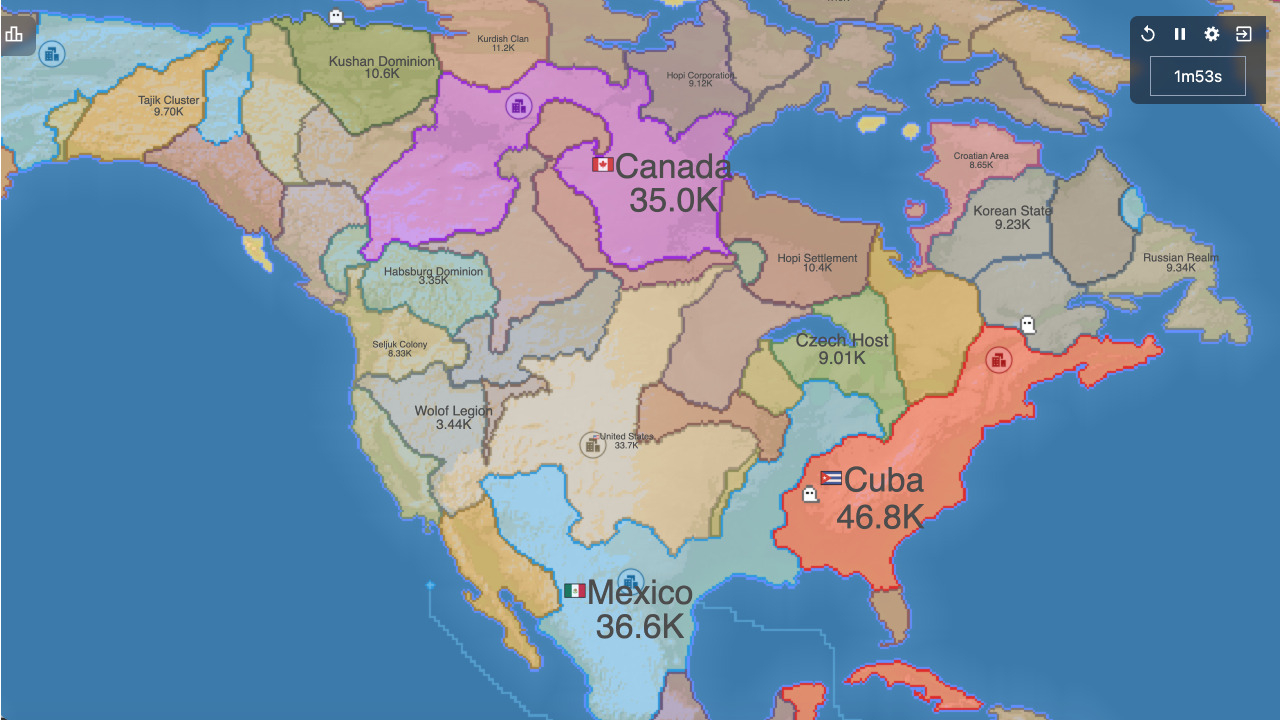

You can play online territory games on Playhop from your browser. The links above cover quick .io arenas, line-claim rounds, country conquest, and team fights. For a heavier battle mood, open War Games and look for maps where armies, bases, and pressure matter more.
Try a quick round, and then see what you think of a slower conquest map. The contrast will make the decision easier.
Final thoughts
Start with a fast .io round before trying a slower conquest map. The contrast will make your next push sharper, and your next empire may even last longer than your lunch break.
Tags


Recent Posts


