
 Top games
Getting Over It: Why It’s So Hard and How to Actually Finish It


You picked up the hammer. You swung it confidently. Then gravity, the final boss of this whole ordeal, sent you sliding back to the bottom. Welcome to the club. Every single person who has ever played this game has been exactly where you are right now. Getting Over it is hard — but there’s a real reason it hurts this much, and there’s a real plan to push through it. This Getting Over it guide explains both. Let’s get into it.
What Is Getting Over It
Getting Over It is a physics game with one goal: climb a mountain using nothing but a hammer. You control a man sitting in a cauldron. You swing the hammer to push, pull, and hook your way upward. That’s the whole thing.
There’s no double jump. No wall grab. No safety net. One tool, one mountain, pure momentum. The controls are intentionally awkward. Tiny inputs have big consequences. The physics engine doesn’t forgive wobbles.
It sounds simple. That’s the trap.
Why Getting Over It Is So Hard
Why is Getting Over it so hard? It comes down to a handful of specific design decisions that combine into one relentless system.
1. The physics punish everything. This is a physics game built to behave realistically. Real hammers don’t glide. They arc, slip, and over-rotate. Newtons don’t care about your feelings.
2. Momentum is your enemy and your tool at the same time. You need momentum to climb. But too much momentum on the wrong surface sends you flying backward. Managing it is the core skill. It takes time.
3. Tiny errors compound. A half-degree mis-aim on a hook can result in a ten-second fall. The gap between “good move” and “disaster move” is almost invisible. That’s by design.
4. There are no checkpoints. This is the one that tilts people hardest. Fall far enough, and you go back — way back. The game offers zero safety net. Every inch of ground is rented, never owned.
5. Mental tilt is real. Frustration degrades precision. After a bad fall, your hands tighten, your moves get faster and sloppier, and you fall again. It’s a feedback loop.
6. Recovery climbs are exhausting. Climbing back up after a big fall means doing the hard parts again, in a bad mental state, with shaky hands. That’s why Getting Over it is so hard on a psychological level, not just a mechanical one.
7. Camera pressure. As you climb higher, the camera pulls out. The scale shifts. Familiar surfaces look different. Your reference points disappear and your spatial sense breaks.
The Only Skill That Matters: Hammer Control
Here’s the truth about Getting Over it hammer control: speed is not the skill. Smooth arcs are the skill.
Most new players swing fast. They treat the hammer like a racket. That’s wrong. The hammer needs to travel in a controlled arc — deliberate, predictable, unhurried. Think of it less like a weapon and more like a third limb.
Micro-moves are your best friends early on. Small, precise rotations. Short pulls. Minimal wrist flicks. The game rewards restraint almost every time. Big swings feel good and go badly.
Stable rest spots are part of the skill too. Before every tricky move, stop and settle. Find a flat angle. Let the physics settle. A player who rests well wastes less effort and falls less often. Getting Over it hammer control comes down to one phrase: slow hands, clear head.
How to Finish Getting Over It (A Real Plan)
How to finish Getting Over it isn’t about one magic move. It’s a roadmap.


Step 1 — Learn the core moves first. Don’t rush the mountain. Spend your first sessions just getting comfortable with how the hammer behaves on flat surfaces. You’re building muscle memory, not progress.
Step 2 — Find your safe rest spots. Every section of the climb has at least one stable ledge or surface where you can pause without sliding. Identify them. Memorize them. Treat them like save points.
Step 3 — Take one section at a time. Don’t think about the whole mountain. Think about the next three moves. Chunking the climb like this keeps your head clear and your panic low.
Step 4 — Protect your progress obsessively. Before a risky move, find the nearest rest spot below you. Know exactly where you’ll reset to if you slip. Protecting progress matters more than gaining it fast. That mindset is how to beat Getting Over it.
Movement Basics: 6 Hammer Moves You Must Practice
Nail these six moves. Everything else is a combination of them.
1. Push. Plant the hammer tip on a surface and extend away from it. This moves you forward or upward. Use it on low-angle terrain. The key is not to over-extend.
2. Pull. Hook the hammer and drag yourself toward the anchor point. This is your main climbing move on vertical surfaces. Short pulls beat long ones every time.
3. Swing. Let momentum carry you in an arc from one anchor to another. This feels satisfying when it works and catastrophic when it doesn’t. Practice the entry angle before committing.
4. Hook. Place the hammer tip on a ledge above you and use it as a fixed point to lever yourself up. This requires good camera control — you need to see exactly where the tip lands before you commit weight.
5. Micro-adjust. Tiny hammer rotations with almost no movement. This is how you settle into an unstable position, find grip on a tricky surface, and stop a slide before it becomes a fall. The most underused move by beginners.
6. Reset. When a move goes wrong, sometimes the right call is a deliberate controlled retreat to a stable position. Don’t chase a bad move with another bad move. Reset, breathe, try again. This is a move, not a failure.
The “No Big Falls” Rules
Avoiding the big fall is the entire game. These rules help.


Rule 1 — Never full-send near edges. If you’re close to a ledge, move slow. Test grip before committing weight. One casual swing near the edge is the most common way to lose five minutes of progress.
Rule 2 — Always test grip before moving. Touch the surface with the hammer tip. Feel how it sits. Surfaces behave differently. Some grab, some slide. Know before you commit.
Rule 3 — Keep camera control calm. Resist the urge to spin the camera during a move. Lock your view before each sequence. Moving the camera mid-swing introduces variables you don’t need.
Rule 4 — Treat rest spots as checkpoints. Every time you reach a stable ledge, stop. Take a breath. Don’t immediately push on. That pause resets your nerves and confirms your anchor point.
Rule 5 — Slow down after a near-miss. A close call is a warning. It means you pushed the edge of your precision. Don’t speed up — slow down. The mountain has infinite patience. Use some of it.
Rule 6 — One move at a time on hard sections. No flow-state heroics on technical terrain. Plan each move individually. Commit only when you’re ready.
Rule 7 — Avoid overhanging surfaces without a confirmed hook. If you can’t see where the tip will land, you’re guessing. Don’t guess with hard-earned altitude.
Rule 8 — Know your Getting Over it strategy for recovery before you climb. If you’re about to attempt a difficult section, identify the nearest safe reset point first. Know exactly where you’ll land if it goes wrong.
Stuck Spots: How to Beat Common Pain Points
Everyone gets stuck. The approach is always the same.
First, change your camera angle. A fresh viewing angle reveals grip points and ledge edges you couldn’t see before. Most stuck spots are actually camera problems in disguise.
Second, slow down drastically. If you’ve tried fast three times and failed three times, fast is wrong. Cut your swing speed in half. Exaggerate your patience. The slower version usually works.
Third, find a lower anchor point. Instead of trying to reach the high ledge in one move, look for a middle point. A two-move sequence through a lower anchor point is always safer than one desperate lunge.
Fourth, rehearse the safe reset. Before trying the hard move again, practice retreating to your rest spot deliberately. Knowing the retreat route makes the forward attempt less panicky. Your Getting Over it strategy here is: own the retreat first, then attempt the advance.
Fifth, take a short break. Five minutes away from the screen genuinely helps. Frustration is a mechanical problem — it slows your inputs and narrows your focus. A short break clears it. Come back with fresh eyes.
Mindset: How to Stop Tilt and Keep Progress


Think of this game as a gym for patience. You don’t go to the gym once and get strong. You show up, do the reps, and build the skill over time. Falls are the reps. They’re not setbacks — they’re practice reps that build the muscle memory you need.
Time-box your runs. Set a timer for 20–30 minutes. When it goes off, stop — regardless of where you are. This prevents the “one more try” spiral that turns a fun session into a two-hour anger spiral.
Stop immediately after a big fall. Don’t play through rage. A tilted player makes bad moves. Quit the session, walk around, come back later. Seriously. This is the single best Getting Over it tip that nobody follows.
Put on music. A calm, familiar playlist in the background keeps your nervous system out of fight-or-flight. It sounds minor. It isn’t.
Reframe every fall. The fall didn’t erase your progress — it gave you information. You now know exactly which move failed and why. That’s useful data. Use it.
The players who finish this game are not the ones who never fall. They’re the ones who fall and come back every single time.
Practice Routine (10 Minutes a Day)
You don’t need marathon sessions. Short, focused practice beats long frustrated grinds.
Minutes 1–2: Warm-up moves. Start at the bottom. Do slow, deliberate push and pull moves on easy terrain. You’re waking up your muscle memory, not testing yourself.
Minutes 3–6: One hard spot practice. Pick one section that gave you trouble last session. Attempt it repeatedly with full focus. Try different approaches. Don’t move on until you’ve found a consistent method — or until the time is up.
Minutes 7–9: One full run attempt. Start from the beginning. Climb as far as you can with the mindset of “protect progress.” No heroics. This trains continuity and endurance.
Minute 10: Cool down. Drop back to easy terrain. Do a few clean moves just to end the session on something that felt good. This is more important than it sounds — it resets your association with the game from “frustrating” to “manageable.”
Mistakes That Keep You Stuck
These are the habits that stall every climber. Cut them and you’ll notice the difference fast.
- Rushing after a rest. You found a good spot. Great. Now you immediately launch into the next hard move. Stop. Settle. Then move.
- Over-rotating the hammer. You aim for a surface and swing past it by 20 degrees. The hammer slips. You fall. Smaller arcs.
- Camera panic. Something goes wrong and you spin the camera trying to see more. Now you’re disoriented and falling. Lock the camera first, fix the problem second.
- Not using micro-moves on technical terrain. Full swings on narrow ledges. This is a classic beginner mistake and a common intermediate one too.
- Revenge climbing. Fall badly, then rush back up with no plan. You’re playing angry, not smart. Take the break.
- Skipping rest spots. You’re on a roll, you feel good, you skip the ledge. Then you fall further than you climbed. Use every rest spot you find.
- Ignoring the camera angle before a hard move. You try a hook without confirming the landing point. The tip misses. You fall. Always look first.
- Treating every fall as a catastrophe. The emotional cost you assign to falls affects your nervous system. Lower the stakes in your head. It’s just one more practice rep.
- Not varying your approach when stuck. If you’ve failed the same move the same way three times, the move itself is wrong. Change something — the angle, the anchor point, the speed.
- Playing too long when tired. Fatigue kills precision. Tired hands make more mistakes than frustrated ones. Know when to stop.
Playhop: Games Like Getting Over It (Try the Climb Loop Now)
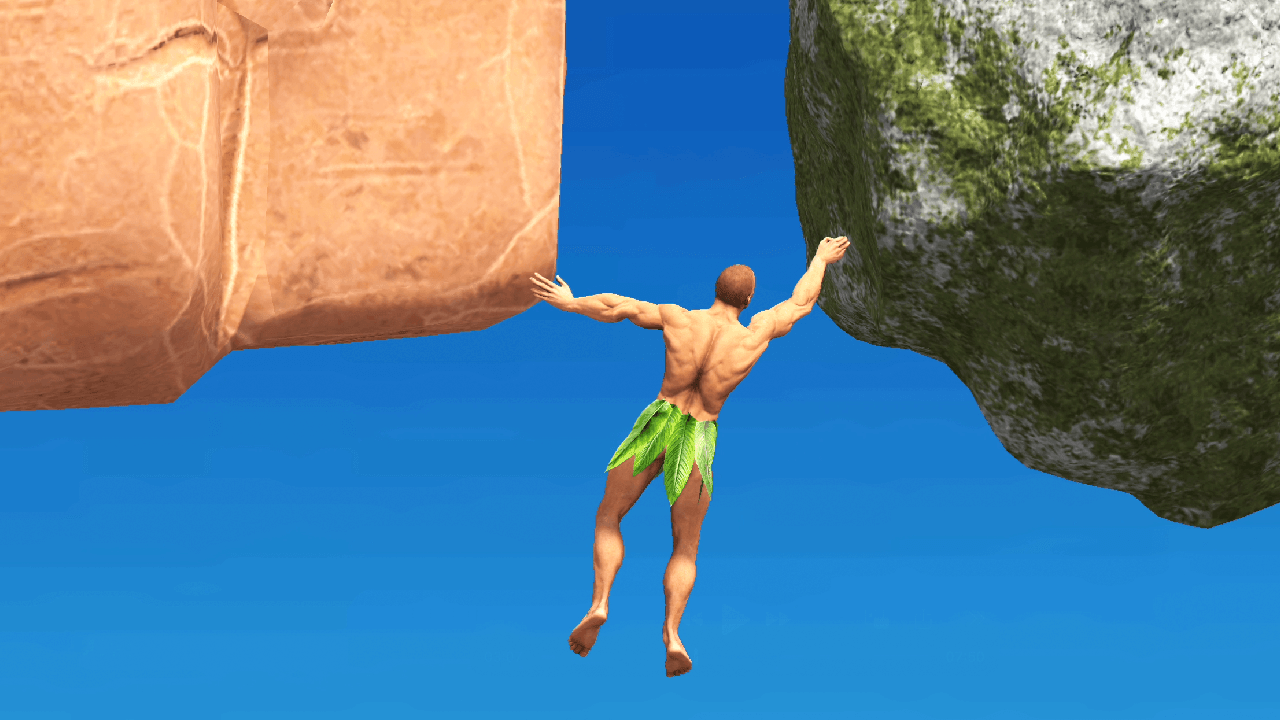

If Getting Over It lit something in you — that mix of frustration and forward momentum, the satisfaction of a clean move — you’ll want more of that feeling. Playhop has a whole collection of physics game and parkour titles you can jump into right now, no download needed. Here’s your Getting Over it guide to what’s next.
Playhop Picks: Physics Climbing and Parkour
Ragdoll Rock Climber gives you that same unstable, physics-driven climbing feel. Your character flops and grabs as you haul yourself up rocky faces using ragdoll physics. Every move requires the same deliberate micro-moves and anchor point thinking as Getting Over It. The chaos is the point — and the satisfaction when something works is identical.
Only Up: Stickman Parkour takes the vertical climb concept and strips it down to pure platforming. You’re always going up. Fall and you lose altitude. It scratches the same “protect your progress” itch in a lighter, faster format. Great for building the muscle memory of committing to a jump without hesitation.
Quadbears: Ragdoll Obby Parkour 3D brings chaotic ragdoll physics into a colorful obstacle course. It’s a rage game in the best sense — short sessions, quick retries, and the kind of clumsy-but-lovable movement that makes every success feel earned.
Playhop Picks: Rage Games and Precision Platformers
Obby Parkour: Tower of Hell is exactly what it sounds like: a tower you must climb through obstacle course sections with no checkpoints at the top. It’s a pure rage game format. Falls send you down. Retries are instant. Sessions are short. The challenge is real. If Getting Over It trained your patience, this will test your speed.
Parkour Block 3D offers a more structured precision platforming experience. You jump and sprint across block platforms — one mistimed move and you drop. The precision required per jump is lower than Getting Over It’s hammer mechanics, but the cumulative climb and fall stakes are very familiar. Good for practicing commitment and clean landings.
Obby Ragdoll: Playground Parkour mixes ragdoll physics with obstacle courses in a playground setting. Each run is a short burst of controlled chaos. The quick retry loop makes it a solid cool-down game after a frustrating Getting Over It session — same DNA, lower pressure.
Playhop Hubs: Find More “Hard but Fair” Games
When you’re done with these picks, two discovery hubs on Playhop will keep the queue full.
The parkour tag collects every climbing, jumping, and movement-skill game on the platform. It’s the best single place to find that “hard but fair” feeling in a new format. New titles get added regularly.
The obby tag is the home of obstacle-course games — fall-heavy, retry-fast, skill-rewarding. If you like the structure of Getting Over It’s punishing climb-loop but want more variety in how obstacles are laid out, this is your hub.
Both tags load instantly in the browser. No sign-up required to explore. Pick one and start clicking.
Final Thoughts


Getting over it is hard because the game was designed that way on purpose. The physics are unforgiving. The falls are steep. The lack of checkpoints is intentional. But the design is also fair — every single inch you climb is possible. Nothing is cheap. Everything can be done.
Control beats speed. Protecting your progress beats rushing it. Managing tilt beats powering through it. Those three ideas, applied consistently, are how to beat Getting Over it.
When you’re ready to keep the momentum going, head over to Playhop and try the picks above. Getting Over It is just the beginning of the climb.
Tags


Recent Posts


