
 Top games
Spider Solitaire Strategy: Advanced Tips for Winning More Often


Good play comes from steady board control: protected space, clean runs, and choices that support the next few moves. The trick is learning which choice gives you more room, which reveals something helpful, and which only makes the mess look busy. Undo can still be your friend, but the real improvement comes from spotting patterns before the layout locks up.
Spider solitaire set up (quick explanation)
Spider solitaire starts with ten columns in the tableau. Some cards are face up, while most begin as face-down cards. Your first job is to uncover the hidden cards without ruining the structure.
Cards follow a descending sequence. You can play a 9 on a 10, an 8 on a 9, and so on. The main payoff comes from building a full run from King to Ace in one suit, because that clears the run.
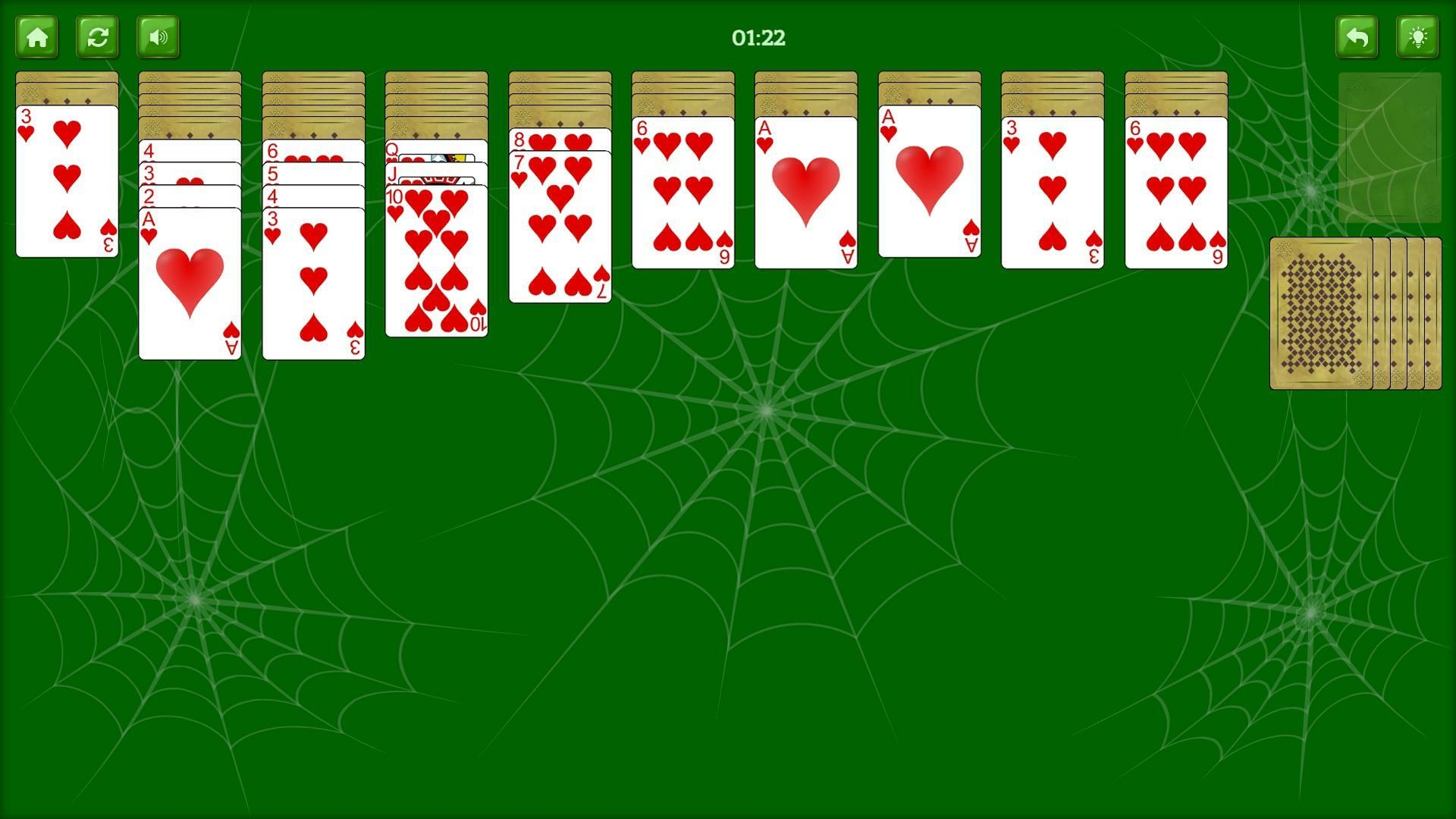

The stock pile adds pressure. Each deal places one card onto every column. A fresh row can create useful options, but it can also cover up clean work when the board is already crowded.
The real goal: build complete runs with purpose
The strongest choices help you clear a run. Complete runs clear space, and space creates choices. Keep that in mind as you’re choosing your next action, especially when a tempting play only shifts clutter from one pile to another.
One clean run in the same suit gives you more value than multiple messy piles. It’s easier to shift, extend, and finish. A mixed stack may solve one problem now and make later sorting harder by trapping useful cards under the wrong suit.


Think of the layout like traffic. Clean lanes let cards travel through. Messy lanes cause gridlock. Strong plays open space, reveal information, or make a future run easier to finish. If two options look equal, choose the one that leaves the cleaner lane behind.
Spider solitaire strategy: advanced principles
If you remember five ideas, these are the ones. They form the core strategy for spider solitaire because they protect the resources that decide most games: space, information, clean order, mobility, and timing.
This is where advanced strategy starts to matter. Strong players shape the next few turns instead of grabbing the first legal play. Better results come from useful action, steady space control, and clean lanes.
1) Empty columns are gold
Empty columns are your strongest tool. An empty column works as a parking space where you can drop a stack, free a blocked card, or rebuild a cleaner run.
Before you fill an open space, ask what your move unlocks. The best options reveal a card, merge a clean sequence, or improve mobility across the board. And if there isn’t a strong payoff, keep that space open until there is.
Use open spaces for unblocking, suit building, and emergency repair. Placing a King there can help when it opens something helpful hiding behind it. One free space can rescue a difficult midgame.
2) Flip hidden cards fast, with a clean plan
Information gives you options, so you need to reveal cards. A newly flipped card can connect a run, open a lane, or give you the missing piece you need for a larger play.
The best reveals keep the layout stable. Check the stack you’re about to break, then decide whether your move will improve future mobility. If the reveal creates a tall mixed pile, the cost can accumulate quickly.
A clean reveal often starts a chain. One card opens a play, that play creates space, and the newly opened space lets you repair your board. Look for that sequence before making a move.
3) Build in the same suit early
Suit control matters more as the game gets harder. Build in the same suit whenever possible, especially in two- and four-suit games.
Strong suit discipline means keeping clean ladders together and only breaking them for a meaningful reveal or major space gain. Use mixed suits as short-term bridges when they unlock something useful. Clean ladders carry the endgame.


When two options reveal the same number of cards, opt for the cleaner suit build. A good ladder can become a full same-suit run later. A messy ladder becomes luggage future decisions have to carry around.
4) Stop creating tall junk stacks
A junk stack is a pile of mixed suits with poor mobility. It can look productive because cards are shifting around. The more it grows, however, the more restricted your set of options is.
Before you move a large stack, ask three questions. Can I move it again later? Is it hiding an important card? Is it blocking a cleaner lane? Weak answers usually mean the stack is getting too heavy.
A small temporary stack can help when it buys something real, such as a reveal, an open column, or a clean merge. Problems start when mixed stacks pile on top of each other and lock the board.


5) Time each stock deal carefully
A stock deal can help when you’re out of options. They’re best when you have space, when most columns can handle a new card, or when you’ve already protected your clean runs.
Scan the board before you deal. Look for one more reveal, a space you can open up, or a clean merge. Even a small improvement can make the next row easier to handle.
The best players are good at timing the deal. Use the stock as a tool, not a panic button. If a lane can be cleaned first, clean it. Then bring in the next row.
How to win in spider solitaire (decision framework)
Take a quick look around before every important move. The easiest way to think about how to win at spider solitaire is to keep more options available than you can use. First, look for space. Can you open space or create a cleanup lane that gives you room to repair your board?
Next, look for reveals. Choose the one that keeps the most structure intact. After that, look for clean builds. Can you extend a suited run, connect two clean pieces, or prep a full sequence?


Then check for junk. If you’re going to create a heavy mixed stack, there had better be a clear payoff. And last, consider the stock. Is it time to deal a new row, or does your board still have room for improvement?
This spider solitaire strategy changes the main question. Instead of scanning for the first available play, look for the move that improves your next three turns. That habit makes tough deals easier to read and helps you win more often.
Spider solitaire tips: suit difficulty (1, 2, 4 suits)
Adjust these tips for spider solitaire by difficulty. In one-suit games, speed matters more because all the cards belong together. Focus on fast reveals, early space, and quickly clearing runs.
In two-suit games, you need more control. Mixing suits can still help, but clean runs take on more importance. Keep both suits from spreading across the whole board, or your midgame will get challenging quickly.
In four-suit games, discipline matters most. Every mixed stack needs a clear reward. The most useful spider solitaire tips for tough boards are simple: build clean first, mix only for real unlocks, and keep one lane open whenever possible.


With more suits in play, every open column becomes more valuable. Treat each jump in difficulty as a new pace. A choice that feels harmless in single-suit can create a serious burden in four. That’s the practical side of advanced strategy.
The midgame: how to recover from a messy board


Start by rebuilding one useful run. Shift small stacks through the open lane, join clean sequences, and free cards that are in the way. A focused repair plan beats random cleanup every time.
Sometimes, a sacrifice move can make sense. You can break a small clean sequence to uncover a vital card or free a blocked column. That trade works when the payoff changes the position.
Watch every blocked lane closely. One trapped low card can stop a nearly finished run from clearing. Focus on consolidating columns, reducing clutter, and using one clean lane to reset the board step by step.
The endgame: how to finish off the last runs
The endgame rewards careful play. When multiple runs are close to finished, protect the structure that’s already working. A near-complete sequence has real value given that it could be out of your hair soon.
Keep at least one open space if you can. That gives you room for final sorting and helps prevent dead ends. Long clean runs deserve extra care because one careless split can turn a triumphant finish into another loss.
If you need to rebuild a run, use your cleanest lane and shift one stack at a time. Random mixing creates extra work at this stage, so keep the final sorting as clean as possible.
This stage needs careful endgame cleanup. Preserve the runs that are already about to disappear, and use empty space to finish off the last pieces. Simple moves are often what finishes the game.


Common mistakes that lose games
The first mistake is dealing too early. Clear space first. The second is wasting open space. Use it for real unlocks, useful repairs, or clean suit building.


Low cards can cause trouble too. A buried Ace or two can block a full run near the end. Strong runs also need protection, even when breaking them looks tempting.
The last mistake is playing too fast. Undo can help, but planning should lead the way. Pause before any moves that change your whole position. If one choice affects three columns, give it a few seconds of thought first.
Mini checklist: a 60-second “win more” plan
Use this quick check before each major turn. Can you open space? Can you reveal a useful card while keeping your board stable? Can you extend a clean suit run?
Then balance against the risks. Will this move create junk? Can you keep a space free? Should you wait before dealing from the stock?
This is how to win spider solitaire more consistently: fewer rushed turns, better space control, and cleaner decisions. Run the checklist again after every deal, seeing as how one new row can change your whole position.
Play spider solitaire on Playhop
You can practice with the Spider Solitaire tag. Start with Spider Solitaire if you want the direct game page.


Want similar options? Browse the Solitaire tag or explore Card Games. The linked game follows the classic goal: clear stacks by suit and rank. Pick a board and test a tactic, then play another round.
Final thoughts
Repeat the checklist, watch where your games usually break open, and turn those moments into habits. The cards will still fight back, but at least you won’t be helping them for free.
Tags


Recent Posts


